Events and Webinars

COVID19 and the Conservation Finance Community: Blended Finance


The fifth Coronavirus and the Conservation Finance Community online discussion will dive into the benefits of Blended Finance for Nature as a robust conservation finance mechanism in the time of Coronavirus and beyond.

July 31st, 11am EST
Registration required

Blended Finance is defined as “the use of catalytic capital from public or philanthropic sources to increase private sector investment in sustainable development” (Convergence).  This was one of the conservation finance mechanisms that remains potentially robust despite the current Covid19 pandemic (see CFA Covid discussion).  Three panelists coming from diverse organizations active in this area will discuss the benefits and challenges of Blended Finance as a conservation finance mechanism. They will discuss, in the time of coronavirus, how Blended Finance can be used to ensure the continuation of capital flows and alignment of incentives in conservation worldwide. Some specific topics may include how the current Covid19 pandemic has impacted the formation and execution of Blended Finance mechanisms. As well, looking ahead, what are some of the lessons learned as a result of this pandemic that can help strengthen Blended Finance mechanisms.

Moderated by:

David Meyers - Executive Director, CFA

 
View the recording here

Panelists


Adhiti Gupta 190621 5x7.jpg

Adhiti Gupta - Convergence

Adhiti is a Manager at Convergence where she leads the market acceleration program for blended finance vehicles in emerging markets. She manages Design Funding, which provides early stage grant support for the design of blended finance vehicles aligned to the SDGs that aim to attract private capital at scale. Prior to Convergence, Adhiti advised funds, family offices and foundation making impact investments in developed and emerging markets while working at RPCK, a boutique law firm in New York City.

Adhiti has previously practiced in India, where she advised on cross-border M&A transactions and private equity/venture capital transactions. Adhiti also counseled social enterprises as a consultant with Accion Microfinance Council and a project manager with Columbia Impact Investing Initiative. Adhiti holds a master’s degree from Columbia Law School, and a law degree from National Law School of India University. She has been awarded the Temasek Foundation Leadership Enrichment and Regional Networking Award by the National University of Singapore.

Gregory-Watson.jpg

Gregory Watson - Natural Capital Lab, IDB

Gregory Watson currently leads the IDB’s Natural Capital Lab, funded with $44M from the governments of France and the United Kingdom.  The lab serves as a one-stop shop for the IDB Group and partners to drive innovation in natural capital finance and biodiversity mainstreaming.  ​It was created to incubate, accelerate, and scale new solutions to pressing environmental problems by looking at nature as asset.  Previously, Gregory was a Lead Specialist at the IDB Lab’s Climate-Smart Agriculture team. He led the IDB’s first equity investment in oceans, led an award-winning Forest Investment Program equity investment in a silvopastoral system in Brazil, helped develop the first Biodiversity Habitat Bank in Latin America, worked to develop a new asset class for natural capital trading, and designed other private sector projects in forestry, development impact bonds, and technology in the natural capital space.


Prior to this, he led the IDB Lab Environment and Clean Energy team in conceptualizing, overseeing, and implementing projects, investments, and research in clean and efficient energy, natural capital, and adaptation.    He created the EcoMicro green microfinance program, which was selected by the UNFCCC as a global “Lighthouse Award”.  He also conceptualized and launched the Climatescope, the first-ever ranking of the investment climate for climate investment in the Latin America and Caribbean region, and designed the first private sector Forest Investment Program project in the world, in Mexico.  A successful fundraiser, he also raised over $50M from the GCF, CIFs, and bilateral donors in this position.


Mr. Watson has a Master’s degree in International Development from the Fletcher School of Law and Diplomacy, and a bachelor’s from Tufts University.

1oXN-GOk_400x400.jpg

Avril Benchimol - Blended Finance, Global Environment Facility

Avril Benchimol is leading the blended finance initiative at the GEF. She has sixteen years of experience in capital markets and structured finance both in multilateral institutions and investment banking. For the last eight years she worked at IDB-Invest, the private sector arm of the Inter-American Development Bank (IDB) and at IDB Lab, designing and executing financial solutions for private sector clients in Latin America and the Caribbean. The projects included the use of guarantees, loans, and structured financing to issue sustainable and green bonds in both local currency and USD. She also led a green microfinance facility in 11 countries that facilitated microfinance clients’ mitigation and adaptation initiatives.

Prior to joining the IDB Group, she spent six years working in investment banking for Morgan Stanley and BNP Paribas Fortis in London, Madrid, and Brussels. Her main areas of expertise included the structuring and origination of equity and debt transactions as well as the sales of structured equity derivatives. In 2011, she received her Master’s of Science in Foreign Service from Georgetown, where she graduated with honors.


Background on the Conservation Finance Alliance and the Coronavirus and Conservation Finance Community Series


The Conservation Finance Alliance (CFA) is the leading global professional alliance of conservation finance experts, practitioners, and organizations.  The CFA’s mission is to promote awareness, expertise, and innovation in conservation finance globally.

The CFA has recently introduced a new series of online discussions regarding the impact of COVID-19 on conservation finance, titled “Coronavirus and the Conservation Finance Community”.

To date, three online discussions have been held. The first discussion focused generally on CTF’s, with representatives from CAFÉ and RedLAC discussing how the pandemic was impacting operations, finance flows, and what the future could look like. The second discussion identified specific conservation finance tools that are viewed as most robust in the face of the crisis. Following the taxonomy of conservation finance mechanisms outlined in the CFA white paper “Conservation Finance: A Framework”, three tools were identified: Public-Private Partnerships, Blended Finance, and Mainstreaming Biodiversity in Development.

The CFA is continuing the discussion by holding three additional online calls, focusing on each of these priority finance mechanisms.  The first of the three calls, which focused on Public-Private Partnerships with an emphasis on Marine Protected Areas, was recently completed on June 18th (recording available here).

The remaining calls are Mainstreaming Biodiversity in Development planned for July 10th and Blended Finance planned for sometime in late July (date will be announced shortly).

Investment Outlook for Environmental Funds in a Post-COVID World

As members and friends of the CFA and RedLAC networks, you are cordially invited to join a virtual panel discussion on the investment outlook for Environmental Funds in the time of COVID-19.  


July 21st, 11AM - 12PM EDT
RSVP below

In this moderated discussion, investment advisors from UBS, FINAD GmbH, and JP Morgan Chase will share their perspectives on the investment outlook for Environmental Funds (Conservation Trust Funds) in the context of the current COVID-19 global pandemic.   


Panelists:

Andrew B. Peake, CFA

Managing Director – UBS International, New York


Andrew joined UBS International in 2013 with over 30 years of experience in financial services, primarily in private wealth management, specializing in managed investment portfolios for ultra-high net worth clients and institutions.  His regional focus includes China, Europe, Latin America and the United States.

He began his career in 1989 in various portfolio management positions at Offitbank and Brown Brothers Harriman & Co.  In 1994, Andrew was recruited by JP Morgan as a Senior Portfolio Manager, where he was responsible for $2B in discretionary global balanced portfolios.  He was also a member of the Trust and Investment Committee for Morgan Guaranty Trust Company of the Bahamas.  In 1998 Andrew was recruited by Morgan Stanley Private Wealth Management, which deals exclusively with that firm's ultra-high net worth clients.

Andrew has two degrees from the University of Pennsylvania - a BA Magna Cum Laude in Chinese History and East Asian Studies and a MA in East Asian Studies.  His Master’s thesis analyzed and discussed the future of Hong Kong.  He also earned a MBA in Finance from New York University and the Chartered Financial Analyst designation.  Andrew is fluent in Mandarin Chinese and has lived, worked and traveled extensively throughout Europe, Asia and Latin America.  He is an avid sports enthusiast and competed for a place in the 1980 US Olympic Hockey Team.  Andrew is actively involved in mentorship programs for students from Asia and is often asked to speak on cultural matters pertaining to China and US business relations. Additionally, Andrew serves on the Financial Advisor Advisory Council a group of Financial Advisors that represent the 6,000 Financial Advisors with senior management in the US. 


Christian Tury

Chief Investment Officer, Managing Director — FINAD GmbH, Vienna

christian-tury.jpg

As a manager in a multi family office, we are all-rounders with a very in-depth understanding of a wide range of financial operations. Assuming responsibility is an obligation, which is why we also invest lots of time in our younger colleagues.

I studied sociology and political science at the University of Vienna, and European Studies at the Danube University in Krems. I always wanted to work in the financial sector. I was approved as a student of business studies at the Vienna University of Economics and Business when I encountered Warren Buffet in Omaha, Nebraska, for the first time. A speculative application to Chase Manhattan Bank made the dream reality. 


Juan Etinger

Managing Director, Global Head of Institutional Portfolio Solutions, J.P. Morgan

juan.JPG

Juan Etinger is a Managing Director and Global Head of Institutional Portfolio Solutions. The group focuses on designing and managing single and multi-asset portfolios for endowments, foundations and institutional families.

Previously, Mr. Etinger was Senior Portfolio Manager overseeing the firm’s offshore Global Access Portfolios, a suite of global multi-asset investment funds that combine traditional asset classes with alternatives, structured investments and portfolio insurance strategies. Additionally, Mr. Etinger served as member of the investment team for the J.P. Morgan Access UCITS Funds, a multi-asset family of open-ended, offshore mutual funds tailored for international clients.

Mr. Etinger was a member of the J.P. Morgan Investment Strategy Team for over six years, responsible for development of investment strategy, including tactical and strategic asset allocation, for over $600 billion in client assets. In addition, he was a member of the Hedge Fund Advisory Council and due diligence’s Investment Review Committee.

Mr. Etinger holds a Master of Business Administration from the University of Chicago Graduate School of Business (Booth), where he graduated with honors with a concentration in Quantitative Finance and Entrepreneurship. He also holds a bachelor’s and master’s degrees in Industrial Engineering from the University of Buenos Aires. He lives in New York with his wife and three children.


Sponsored by the CFA Environmental Funds Working Group CFA - RedLAC - The Nature Conservancy

Sponsored by the Environmental Funds Working Group

A partner event with:

RedLAC-espanol+logo.jpg
 
TNC logo.png

Upcoming Partner webinar: The Rising Blue Dollar, Sustainable Ocean Financing for Marine Conservation

Upcoming webinar presented by Blue Finance and The Commonwealth Blue Charter

The Rising Blue Dollar: Sustainable Ocean Financing for Marine Conservation

When : July 22nd

14:00 - 15:00 BST (GMT + 1)

Marine Protected Areas often suffer from inadequate and unsustainable funding sources, with over 60% globally of existing MPAs having reported inadequate budgets for basic management and compliance. The Commonwealth has a huge stake in the future of our ocean, together covering more than one-third (35%) of national marine waters globally.

This webinar will –

• Provide an overview of the sustainable financing concept for the effective management of MPAs

• Showcase good and best practice case studies from two project sites

• Elaborate how financial resilience needs to be built in, to move forward in a post COVID-19 world

Learn more and RSVP
0001.jpg

COVID19 and the Conservation Finance Community : Public-Private Partnerships


Missed the Webinar? View the recording below:

This is the third webinar in our Coronavirus and Conservation Finance webinar series. In this webinar we will dive into the benefits of Public Private Partne...


The next Coronavirus and the Conservation Finance Community online discussion will dive into the benefits of Public-Private Partnerships (PPPs) for Marine Protected Areas (MPAs) as a robust conservation finance mechanism in the time of Coronavirus. Join us as our panelists discuss the resiliency of Public-Private Partnerships in times of economic and social unrest. The call will involve presentations from the panelists (~30 mins) and then a Q&A session for the remainder of the hour.

The panelists for the discussion are as follows:

ERIC CAREY

Executive Director of the Bahamas National Trust (BNT)

ELEANOR CARTER

Deputy Director of the Chumbe Island Marine Protected Area (MPA) in Zanzibar, Tanzania; and Founder and Director of Sustainable Solutions International Consulting.

NICOLAS PASCAL

Director of Blue finance


Some of the themes and questions that our panelists discussed include: 
 

  • The pros and cons of institutional arrangements for the management structure of PPP's

  • How COVID19 has impacted operations 

  • What are plans to build resilience into PPP related financing mechanisms in the future. 


ABOUT THE CORONAVIRUS AND CONSERVATION FINANCE COMMUNITY

The CFA has recently introduced a new series of online discussions regarding the impact of COVID-19 on conservation finance, titled “Coronavirus and the Conservation Finance Community”.

To date, two online discussions have been held. The first discussion focused generally on CTF’s, with representatives from CAFÉ and RedLAC discussing how the pandemic was impacting operations, finance flows, and what the future could look like. The second discussion identified specific conservation finance tools that are viewed as most robust in the face of the crisis. A detailed recap of the two online discussions can be found here.

Following the taxonomy of conservation finance mechanisms outlined in the CFA white paper “Conservation Finance: A Framework”, three tools were identified: Public-Private Partnerships, Blended Finance, and Mainstreaming Biodiversity in Development.

The CFA would like to continue the discussion by holding three additional online calls, focusing on each of the finance mechanisms in turn. 


CFA Webinar: Blue Natural Capital Financing Facility


Please join us for another very insightful CFA Webinar, hosted by our Marine and Coastal Finance Working Group. The webinar features the Blue Natural Capital Financing Facility, and will focus on recent report : Blue Infrastructure Finance: A new approach, integrating Nature-based Solutions for coastal resilience.


All coastal and marine ecosystems are critical to human well-being and global biodiversity. But urban and rural infrastructure developments are having a heavy negative impact on these systems, and it is increasing over time.
 
Habitats like tidal mangrove forests, seagrasses and coral reefs, can help to make infrastructure investments better, more resilient and financially more attractive. These are known as Nature-based Solutions (NbS). Financial mechanisms are needed to support a shift away from infrastructure investments with unclear or negative impacts on nature towards those providing clean water and energy, flood and erosion control, etc. The developments must also preserve and enhance their coastal and marine environments.
 
The Report and the Webinar present new finance solutions integrating Blue Natural Capital, a critical tool for this transition.

Speakers: 
D. Herr (IUCN, Moderator)
S. Crooks (Silvestrum)
T. Thiele (Global Ocean Trust)
 

Missed the webinar? Please find a recording of it below.


RedLAC Webinar: Sustainable Tourism in the Post COVID-19 Era

When: May 29th, 10 a.m (Mexico/Colombia/Peru)
RedLAC

Zoom:
ID: 864-5298-7217
Password: 455230
Registration required

This webinar aims to analyze the changes that the tourism sector is ecperiencing and the opportunities that are arising for the development of sustainable tourism. We will have the participation of three international experts in the subject: Paloma Zapata, Director of Sustainable Travel International; Hans Pfister, Director of Cayuga Collection; and Vicente Ferreyra, Director of SustenTur. The webinar will be in Spanish.

Register HERE

Coronavirus and the Conservation Finance Community


Coronavirus and the Conservation Finance Community

An Online Discussion Series


There is no doubt that COVID-19 is having far reaching impacts on the global stage. Ranging from the healthcare sector to the global economy, and from climate change to our own interpersonal daily lives as we adjust to this ‘new normal’, the impacts of the novel coronavirus will surely be felt for the coming years. Through this Online Discussion Series, members of the CFA come together to explore how COVID-19 is impacting local, national and global efforts towards conservation finance.


1st Online Discussion: Coronavirus and Conservation Trust Funds
Key Points | Link to recording

2nd Online Discussion: Identifying robust Conservation Finance Mechanisms
Key Points | Link to recording

3rd Online Discussion: Public-Private Partnerships
Key Points | Link to recording

4th Online Discussion: Mainstreaming Biodiversity in Development
Key Points | Link to recording | Download Presentation

5th Online Discussion: Blended Finance
Key Points | Link to recording


____________________________________________________________________________________________________________________________________________

The fifth Online Discussion concluded on July 31st

This is one is three discussion assessing various finance mechanisms that are seen as robust in the face of the COVID19 pandemic.

Panelists:

  • Adhiti Gupta - Convergence

  • Gregory Watson - Natural Capital Labs, IDB

  • Avril Benchimol - Blended Finance, Global Environment Facility

This discussion focused around assessing the opportunities and challenges of Blended Finance.

Blended Finance is defined as “the use of catalytic capital from public or philanthropic sources to increase private sector investment in sustainable development” (Convergence).  This was one of the conservation finance mechanisms that remains potentially robust despite the current Covid19 pandemic (see CFA Covid discussion).  Three panelists coming from diverse organizations active in this area will discuss the benefits and challenges of Blended Finance as a conservation finance mechanism. They will discuss, in the time of coronavirus, how Blended Finance can be used to ensure the continuation of capital flows and alignment of incentives in conservation worldwide. Some specific topics may include how the current Covid19 pandemic has impacted the formation and execution of Blended Finance mechanisms. As well, looking ahead, what are some of the lessons learned as a result of this pandemic that can help strengthen Blended Finance mechanisms.

Our first panelist, Adhiti Gupta, introduced the concept of Blended Finance and offered key data points from Convergence with regards to the increasing capital being catalyzed through blended finance transactions, especially in light of the COVID19 pandemic.

Following our first panelists, Gregory Watson and Avril Benchimol discussed the various operations of their respective organizations, the Global Environment Facility and the Inter-American Development Bank. This webinar followed a different approach as compared to previous webinars, as this webinar was structured as a conversation between the panelists and the moderator, with the moderator posing questions throughout the discussion.

____________________________________________________________________________________________________________________________________________

The fourth Online Discussion concluded on July 10th

This is one of three discussions assessing various finance mechanisms that are seen as robust in the face of the COVID19 pandemic.

Panelists:

  • Tracey Cumming - Expert on Biodiversity Finance CBD, and Technical Advisor to BIOFIN (Biodiversity Finance Initiative)

  • Onno van den Heuvel - Manager, BIOFIN (Biodiversity Finance Initiative), UNDP

  • Katia Karousakis - Biodiversity Team Leader, OECD Environment Directorate, OECD

This discussion focused around assessing the opportunities and challenges of mainstreaming biodiversity in development.

Mainstreaming Biodiversity in Development is a broad category of strategies that supports the alignment of diverse interests towards multiple sustainable development objectives. Some examples for conservation include prioritizing nature based solutions to climate change, integrating watershed management with urban development, integrated planning for SDG targets at the national level, etc. This was one of the conservation finance mechanisms that remains potentially robust despite the current Covid pandemic (see CFA Covid discussion). Three knowledgeable panelists will discuss the benefits and challenges of Mainstreaming Biodiversity in a time of COVID19. They will discuss how mainstreaming assures that investments in nature (including recovery efforts) provide essential cobenefits for other sustainable development objectives.

Our first panelist, Tracey Cumming, introduced the broad concept of Mainstreaming Biodiversity and provided significant context on various questions surrounding the mainstreaming of biodiversity. She also provided insight into the issues deserving immediate attention with regards to mainstreaming, including how to link the sovereign debt crisis and the enhancement of biodiversity, and the need to ensure recovery/stimulus packages as a result of COVID19 are biodiversity positive.

Our second and third panelists, Onno van den Heuvel and Katia Karousakis, focused on how organizations such as BIOFIN are implementing these strategies on the national level, and how to better monitor progress on mainstreaming biodiversity in the post-2020 global biodiversity framework.


____________________________________________________________________________________________________________________________________________

The third Online Discussion concluded on June 18th.

This is one of three discussions assessing various finance mechanisms that are seen as robust in the face of the COVID19 pandemic.

Panelists:

  • Eric Carey - Executive Director of the Bahamas National Trust (BNT)

  • Eleanor Carter - Deputy Director of the Chumbe Island Marine Protected Areas in Zanzibar, Tanzania; and Founder and Director of Sustainable Solutions International Consulting

  • Nicolas Pascal - Director of Blue Finance

This discussion focused around assessing the benefits of Public-Private Partnerships (PPPs) for Marine Protected Areas (MPAs) in the face of COVID19. Public-Private Partnerships can be defined as “a long-term contract between a private party and a government entity, for providing a public asset or service, in which the private party bears significant risk and management responsibility, and remuneration is linked to performance” (World Bank), and they can play a key role in the maintenance of MPAs. Three panelists coming from diverse backgrounds within the marine conservation space discussed the benefits and challenges of PPPs in the context of the COVID19 pandemic.

The first two panelists, Eric Cary and Eleanor Carter walked the audience through two case studies of Marine Protected Areas under a PPP agreement and how they were faring due to COVID19; the Bahamas National Trust, which is a NGO charged with the management and custodianship of several protected areas throughout the Bahamas, and the Chumbe Island Coral Park, the first privately managed (by a non-profit organization) MPA in the world.

Our final panelist, Nicolas Pascal, discussed how to bridge the finance gap that most MPA’s face through various avenues such as Blended Finance schemes in order to draw investors seeking financial returns.


The second Online Discussion concluded on May 11th.

This discussion was broken into 2 parts. Part One focused on identifying individual Finance Mechanisms that are either positively or negatively impacted by the COVID19 pandemic. Part Two focused on understanding the debt accrued in both developed and developing countries as a result of the pandemic, and how this debt can be leveraged to benefit conservation and biodiversity.

Main speakers for the second discussion:

Sean Nazerali - BIOFUND Mozambique | David Meyers - Executive Director, Conservation Finance Alliance | Simon Zadek - Vivid Economics

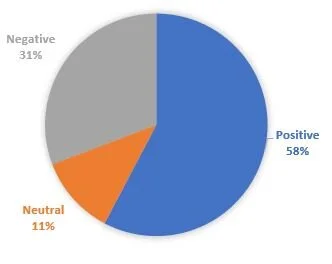
This Online Discussion had an interactive element, where participants were asked to score the 34 finance instruments outlined in the CFA White Paper “Conservation Finance: A Framework” based on how resilient the instruments are to the Coronavirus pandemic. The results of the scoring exercise are displayed below. The scoring will help form the foundation for a potential Task Force that will outline steps conservation finance professionals and practitioners can take to insulate finance flows from negative global and health crises.

Three Finance Instruments that are considered to be resilient to the Coronavirus pandemic:

Sustainable Investment Strategies

Blended Finance

Mainstreaming Biodiversity in Development

Capturesustainableinvest.JPG
Captureblendedfinance.JPG
Capture P2P.JPG

Three Finance Instruments that are considered to be prone to the Coronavirus pandemic:

Capital Markets

Debt: Leasing, Bank Loans, Notes and Trade Finance

Fees and Charges

Capturecapitalmarkets.JPG
Capturedebt.JPG
Capturefeesandcharges.JPG

Three Finance Instruments that are not considered to be greatly impacted (negatively or positively) by the Coronavirus pandemic:

Deposit-Refund Schemes

Management Effectiveness

Integrated Accounting

Capturedepositrefund.JPG
Capturemanagement effectiveness.JPG
Captureintegrated accounting.JPG

In the second part of the webinar, we heard from Simon Zadek, who spoke on aligning sovereign debt levels with increased attention towards nature and biodiversity conservation goals. Please find selected remarks below:

“The interesting question, is whether we can achieve two wins: reducing the cost of capital to developing countries while at the same time encouraging particularly biodiversity rich countries to invest more extensively in managing various aspects of nature. We are all familiar with the debt-for-nature swap agenda now going back a number of years, and the conditionality, both dual and performance related, attached to debt in previous years.

The opportunity we have over the short term, is to insert a nature component to the discussion and not drive conditionality, but to push developed countries to offer a reduced cost of capital in moving more debt towards those countries in return for a degree of nature co-benefit. The opportunity is there, though the window is quite narrow, as there will be a huge explosion of emerging market debt growth.

The Financing For Biodiversity Initiative is going to take forward the agenda, and we need actors from within both the finance and biodiversity community. We will be pushing ahead first with a technical piece and an outreach piece. We are talking about a growth or restructuring of debt. We must use this ‘Black Swan’ opportunity.”

The full recording of the Online Discussion Series is available for view here.


The first Online Discussion concluded on April 20th, and focused mostly on Conservation Trust Funds.

Main speakers for the first discussion:

Karen Price - CAFÉ | Zdenka Piskulich - RedLAC | Thierry Renaud - MAVA Foundation | Constance Corbier-Barthaux - FFEM | James Money-Kyrle - Associate Director, The Good Economy | Melissa Moye - WWF US

When looking at the current financial outlook due to the crisis, what advice could be given to Conservation Trust Funds? - James Money-Kyrle (Associate Director, The Good Economy)

Focus on your strengths. Endowments that constitute the assets of CTFs are powerful tools during this very uncertain time.

Foundations and Trusts with long term time horizons should seek to continue spending where they can, and particularly where a total return approach is used.

Avoid making snap decisions. Hasty decisions can be very costly. Use the time wisely now to make sure CTF activities and investments are aligned with respective missions or overall long-term strategy.

What unique challenges are CTFs facing in this crisis? - Zdenka Piskulich (RedLAC)

The challenges CTFs are facing are both external and internal.

Internally: Due to the crisis many fundraising campaigns have been postponed. There has also been an increase in workload, and in many cases an incapacity to fulfill previously set commitments to funders.

Externally: Many conferences have been postponed. This is especially difficult as 2020 was poised to be the Super Year for Biodiversity. Additionally, many governments are redirecting attention to the crisis, thus many agreements CTFs have with governments are now paused or being postponed.

How are CAFÉ members faring in this crisis? - Karen Price (CAFÉ)

This emergency is to a large extent something that African CTFs across the board were not financially prepared for. Few CTFs have an ‘emergency budget’ at this time. In addition, there are no operational guidelines for such a situation, leaving many CTFs attempting to navigate this crisis in accordance to how both the international community and national governments are reacting.

As a CTF, our field presence has been reduced drastically. There is still work being done with partners in Protected Areas, however the concerns around modality adjustments towards the CTFs remain.

Constance, how has FFEM reorganized funded programs around the world? - Constance Corbier-Barthaux (FFEM)

FFEM is devoted to conservation linked to development, and of course all the threats that are facing CTFs discussed earlier are large issues of concern for FFEM as well.

On a positive note, this is the time for capitalization, for exchange of ideas, new ways to communicate and exchange. The two networks, RedLAC and CAFÉ, as well as the CFA will play a central role in exploring these new ways of communication and understanding what information to share and how to share it.

What positive things can we see coming out of this current crisis? A silver lining, if you will? - Thierry Renaud (MAVA)

We are all figuring out what this situation means, as well as to try to understand the long-term impact. The good news is that CTFs, from MAVAs perspective at least, are viewed as the most resilient organizations compared to other civil society organizations. There are three main points I would like to stress when addressing CTFs and Foundations:

-        There is now pressure to step up: increase investment and fill the gap, but also to give more flexibility to partners. In times of crisis, increasing the amount you give away to partners might be very important. Be part of the solution.

-        Money for biodiversity will be scarce, so CTFs need to make a case that they are good investments. CTF’s need to be able to show their resilience in this crisis. This will allow CTFs to receive additional investments in the future.

-        For the broader Conservation Finance community, we must do what we can to ensure that large government efforts to relaunch economies are also paying attention to biodiversity and conservation efforts.

What is the NGO perspective on the situation? - Melissa Moye (WWF-US)

One of the biggest challenges moving forward is to explore the greening of the wider global economic recovery and foreign aid process. It will be interesting to see what is going to happen with respect to conditionality attached to debt-relief.

This crisis should reinvigorate efforts to eliminate wet markets and illegal wildlife trade. This crisis shows that the closure of wet markets is essential and highlights links between deforestation and pandemics.

Indigenous peoples are more vulnerable to health issues related to COVID-19, therefore special attention must be given towards the protection of those peoples. Finally, it is interesting to note that certain donors and partners are stepping up more as a result of the crisis. We are seeing individual donors stepping up more when they see individual governments stepping back, as these donors are working harder and not letting COVID-19 disrupt and interfere with their activities.


Kellogg-Morgan Stanley Sustainable Investing Challenge

Watch the Virtual Finals of the Kellogg-Morgan Stanley Sustainable Investing Challenge!

Every year, the Kellogg-Morgan Stanley Sustainable Investing Challenge invites teams of graduate students to develop and pitch creative financial approaches to tackle pressing social and environmental challenges. On Friday, April 17, the final 3 teams will pitch live to an international virtual audience, and we invite you to join us.

In 2020, 308 students from 56 countries representing 74 schools proposed 95 innovative finance ideas intended to change the world for the better.

More About the Challenge

The Challenge identifies, empowers, and inspires the next generation of sustainable finance practitioners and connects them with leading industry professionals. Teams of graduate students from around the world are invited to participate. Each team is limited to a maximum of four members, all of whom must be enrolled in a graduate program at the time of the prospectus submission.

2020 Focus on Plastics

In addition to our broader call for proposals inviting creative financial approaches to social and environmental issues, the 2020 Sustainable Investing Challenge is encouraging concepts that target plastic waste. This new-for-2020 opportunity is in keeping with Morgan Stanley’s Plastic Waste Resolution and commitment to facilitating the prevention, reduction and removal of 50 million metrics tons of plastic waste from entering rivers, oceans, landscapes and landfills by 2030. Proposals that address the issue of plastic waste will be eligible for an additional prize of $5,000 in addition to eligibility for the annual top and runner-up prizes for the overall competition.

Register to watch the event here, and read more about the event here!

Photo taken by Jarle Naustvik (https://www.flickr.com/photos/naustvik/3763048882/)

Conservation Trust Fund Projects - Update

Posted: March 12, 2020

The two Conservation Trust Funds (CTFs) projects are well on their way. Recently the consulting team from Wolfs Company and Aligning Visions sent a comprehensive survey to just over 100 CTFs – the 50% response rate was exceptional, and has produced a robust body of data that will, along with interviews, inform the 10-Year Review of CTFs. We extend tremendous thanks to the CTFs that took the time to complete the survey and contribute to this process. The updates to the Practice Standards for CTFs are also moving ahead. The CTF Projects Task Force will review a complete draft of the Standards in the second half of March.

Starting in mid-April, the draft will be circulated to the Environmental Funds Working Group (EFWG) for review and comment. Anyone who wants to participate in the review process is encouraged to join the EFWG.

We plan to launch the updated Practice Standards and the 10-Year Review at the CFA’s Pavilion at the World Conservation Congress in June.

The CFA Incubator - Update

The CFA recently closed (Jan 31, 2020) a call for proposals for its first round of virtual incubation.  The CFA Incubator will award 5 subgrants of $25,000 each and mentorship support to the top 5 proposals received.  Announcement of the successful proposals will be made next week. Many thanks to our partners and communications channels as well as all of the amazing conservation finance entrepreneurs whom applied. We received 75 fascinating and inspiring applications from a wide geography (42 countries) and diverse organizations with over a quarter being led by women.  The overwhelming positive response to this Call combined with the quality of the proposals received has encouraged us to expand the mentoring support for projects to an additional 10 proposals.  These additional 10 chosen projects will be supported through CFA Staff and Member mentors.  All 15 projects accepted into the CFA Incubator will have the opportunity to present their ideas during the World Conservation Congress at the CFA Pavilion. We are very excited to begin the mentorship process!

 If you are interested in being a mentor and are not part of the CFA Innovation Working Group, please join the Working Group via this link.   

The following is a quick summary of the applications received: 

Capture.PNG

The diversity of applicant organizations, their geographic distribution and ideas that they contain are truly representative of the CFA membership and indicate the growing interest in the CFA from conservation finance practitioners.  We are pleased to see such a positive response and believe that we can build a solid program that will stimulate additional conservation finance activities. The CFA Incubator Technical Review Committee is currently reviewing all applications using the previously agreed upon scoring criteria. Recipients will be announced shortly.

The CFA is currently seeking additional technical and financial partnerships for the CFA Incubator, building from our current partnerships that include:

·       Fonds Français pour l’Environnement Mondial (FFEM)

·       MAVA Foundation

·       Conservation International Ventures

·       Posaidon


Please contact David Meyers, Executive Director of the CFA for further information.

Again, if you are interested in mentoring one of these amazing concepts but are not yet part of the Innovation Working Group, please join the Working Group by visiting the Innovation WG page on the CFA website or contacting the Secretariat.